Desert Trekking Checklist: What to Pack for a Multi-Day Hike
Desert hiking punishes guesswork. The trail is often faint or gone entirely, shade is a rumour, and the distance between water sources is measured in hours rather than minutes. Packing for a multi-day desert trek is less about gear fashion and more about carrying your own survival without wrecking your knees. Get five things right — water, sun, layers, navigation, emergency kit — and the rest tends to sort itself out. Here is what earns its place in the pack.
Start With Water: Capacity, Containers and Electrolytes
Decide how much water you can carry before you decide anything else, because your water load dictates your pack size, your daily mileage and how much food you can afford to bring. A common starting point for desert hiking is three to four litres per person per day in mild conditions, and considerably more in serious heat or on steep ground. Nobody can give you a precise number for your body and your route, so plan around the longest dry stretch instead: carry enough for that stretch plus a reserve, and treat every extra litre as insurance you hope to pour out at the car.
Split your water across at least two containers. A reservoir plus one or two rigid bottles means a single failure doesn't leave you dry, and rigid bottles are easier to check, pour and ration. Weigh your full load at home; six litres is around six kilograms, and that changes how far you'll want to walk in a day.
Drinking strategy
- Sip steadily rather than gulping at rest stops, and drink before you feel thirsty.
- Carry electrolyte tablets or powder for long sweaty days — plain water alone can leave you flat and headachy.
- Pack salty snacks: nuts, jerky, olives, salted crackers.
- Drink properly at every water source, then refill everything before you leave it.
If your route allows it, cache water in advance. Label containers, hide them in deep shade or bury them slightly, and note the landmark carefully. Check with the land manager first — rules on caching vary between parks, reserves and private land.
Stop and cool down immediately if someone develops a headache, nausea, dizziness or confusion in the heat. Severe heat illness is a medical emergency and needs evacuation, not a rest break.
Sun Protection Is a System, Not a Tube of Lotion
Lotion alone won't save you across eight hours of open sky. Build a system: a loose, light-coloured long-sleeve shirt, long trousers or a skirt, a wide-brim hat with a chin cord for the wind, and lightweight sun gloves if your hands burn easily. A neck gaiter or scarf lets you cover your face during the worst of the afternoon.
Sunglasses matter more than most people expect — glare off pale ground and rock is relentless, so bring a category 3 or 4 pair with side coverage, plus a spare if you're hard on gear. Use a high-SPF sunscreen on ears, nose, lips, the back of your hands and any exposed ankles, and reapply every couple of hours. A trekking umbrella is a genuine luxury here: it turns a shadeless lunch stop into a comfortable one and doubles as rain cover.
Layers for Blazing Afternoons and Cold Nights
Deserts swing hard. You might hike in the high thirties at four in the afternoon and shiver in single digits before dawn. Bring a light moisture-wicking base layer, a thin fleece or synthetic mid layer, a light puffy jacket for camp and cold mornings, and a wind shell. A rain jacket is worth the few hundred grams if any storm is in the forecast — desert rain is rare but it arrives fast and turns dry washes into rivers.
Avoid cotton against your skin. It holds sweat, chafes and stays cold once the sun drops. Keep one set of dry camp clothes sealed in a bag and never hike in it.
Navigation That Works When the Trail Disappears
Desert routes are often marked by cairns, faint vehicle tracks or nothing at all. Carry a paper map and compass you know how to use, and treat your phone as a backup rather than the plan. Download offline maps and GPS tracks before you leave home, carry a power bank, and keep the phone out of direct sun — hot phones throttle, and cold nights drain batteries.
- Paper map, in a plastic sleeve, in a pocket rather than the pack.
- Compass and the ability to take a bearing.
- Offline GPS app with the route saved, plus a power bank and cable.
- A satellite messenger or personal locator beacon if there's no phone coverage.
Check your position often, especially at junctions, and turn around to look at the terrain behind you — the way back rarely looks like the way in.
The Emergency Kit That Earns Its Weight
Keep a small kit that lives in your pack on every walk, not just the big ones: blister plasters, tape, painkillers, antiseptic wipes, antihistamines, tweezers, a small roll of duct tape, cord, a spare lighter, a headlamp with spare batteries, an emergency space blanket, a whistle and a signal mirror. Add a repair patch for your sleeping mat and a spare buckle or two.
Leave a written itinerary with someone at home — route, camps, vehicle description, expected finish time and who to call if you're late. In desert country, that single piece of paper is often the fastest route to help. For any medical conditions, medication or training plans, speak to a qualified health professional before you go.
Feet, Shelter and Camp Comfort
Breathable trail runners or lightweight boots work well in dry heat; waterproof membranes just cook your feet. Pair them with a thin liner sock under a wool or synthetic sock, and change socks at midday — dry feet prevent most blisters. Gaiters keep sand and spiky seed pods out of your shoes, and a pair of camp sandals gives your feet a break in the evening.
For shelter, a freestanding tent handles hard ground and sand better than a trekking-pole design that needs pegging. Bring more stakes than you think you need, a small brush or cloth to wipe grit out of the tent, and a warm sleep system rated below the coldest night you expect.
The quick packing checklist
- Water: 4–6 L capacity across multiple containers, electrolyte tabs, water treatment if sources are unreliable.
- Sun: long sleeves, wide hat, sunglasses, SPF 50 sunscreen, lip balm, umbrella or buff.
- Layers: base layer, mid layer, puffy, wind shell, rain shell, dry camp clothes.
- Navigation: map, compass, offline GPS, power bank, satellite messenger.
- Emergency: first aid, repair kit, headlamp, lighter, space blanket, whistle.
- Feet and sleep: liner socks, wool socks, gaiters, camp shoes, tent, stakes, sleeping bag and mat.
- Food: calorie-dense, low-moisture meals plus salty snacks, and a spare day's food.
Shakedown Before You Go
Fill every bottle, load the pack and walk a few hours on a warm afternoon near home. You'll discover the shoulder strap that rubs, the bottle that leaks and the fact that your pack is heavier than you imagined. Adjust, repack, and do it once more. Two short training walks with a full water load will teach you more about your desert kit than any list, including this one.
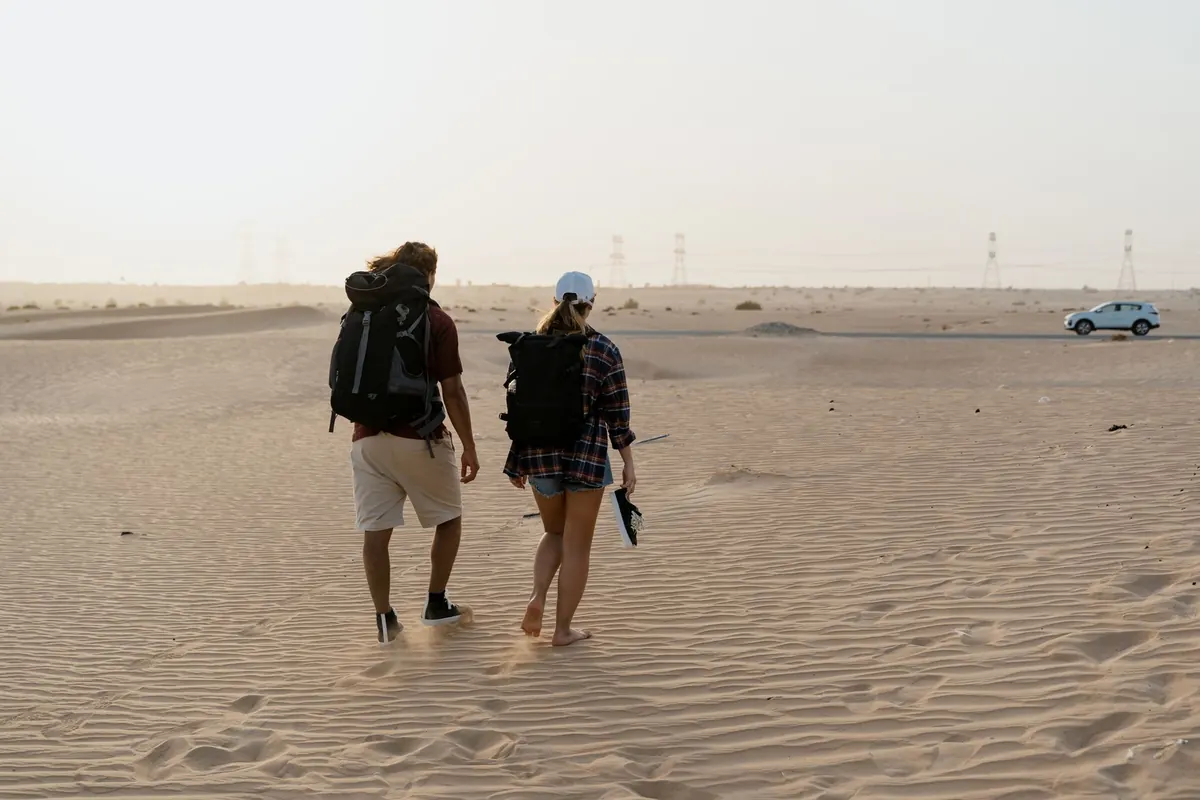
Photo: MART PRODUCTION / Pexels